Our Blog/Newsletter Archive
In case you missed these in your inbox or have not yet made it to the subscriber list (subscribe below!).
18 September, 2026 —
Two weeks away!!
Hello EFF ticket bearers!
Hope you are enjoying the slow turn towards autumn with the equinox (Mabon) just around the corner. The fungi are stirring, some already popping up all around - maybe you’ve already spotted them!
The festival is just about ready for its very first fruiting after spending many months expanding, connecting, and percolating underground. Thank you so much for wanting to come enjoy the first installation of this community-led passion project. It will be a really special weekend full of learning, community-building, music, food, and more-than-human connections. Over 80% of our total tickets have already been reserved and we are expecting a sell-out…how exciting for our first go!!
This newsletter contains important information about the upcoming festival weekend, so please do read it carefully!! There will be another newsletter with further details coming in the next week. Some topics covered in this one will include: UPDATES TO THE PROGRAMME (music!), INFO ON ATTENDING WORKSHOPS & FORAYS (limited capacity activities), CHILDREN-SPECIFIC ACTIVITIES, and MARKETSPACE info. It may be helpful to read these alongside the festival programme on the website. The next newsletter will contain more details about the venue (including maps), parking, timings, and food.
UPDATES to the Programme
We are excited to announce some exciting developments which have come into the programme for Saturday (October 3rd). This takes the form of music and live poetry reading!! From 3 pm Saturday, the main area of the festival will be animated with the experimental sound composition of SILVERGRN, who may just be MAKING MUSIC LIVE WITH MUSHROOMS?!! At 3:30 pm, Poet’s Corner from Glasgow will be gracing us with their musings and reflections on mushrooms with their very special half-hour of poetry reading. Afterward, tekumonk will slip onto the decks with some ambient grooves and live instrumentalisations! Finally, dj aNu - queen of the daytime dance parties for all ages - will hop on, filling the space with bouncy energy and big smiles to wrap up day 1!
To recap, additions to Saturday’s programme are:
SILVERGRN 3-3.30
Poet’s Corner 3.30-4
tekumonk 4-5
DJ aNu 5-6
Not to forget the wonderful programming that will still be happening Saturday afternoon with Rhyze Mushroom Coop’s What Role can Fungiculture play in an Agroecological Movement? workshop from 2-3:30 in the Elm room, Alfred Drummond-Herdman’s amazing presentation Exploring the Fungi of Edinburgh Through Timelapse & Macro-Photoraphy from 3-4pm in the Alder Room, the spectacular multidisciplinary fungal performance Queer Flora, Fauna, and Funga delivered by contributors to the book of the same name from 4-6pm in the Elm Room, and Edinburgh Fermentarium’s Nukazuke Fermentation workshop from 5-6 pm in the Alder room.
Workshops and Forays: info
Many of you are already getting excited about our fabulous line-up of forays and workshops, which is the proper reaction. We are doing a FIRST COME, FIRST SERVE approach with these. For forays, the meeting point will be in front of the Nucleus front door, marked by a sign and accompanied by the foray leaders and a steward or two. Workshops will all be happening inside, either in the Elm or Alder rooms. If you want the best chance at a spot, please show in advance of your desired workshops or forays! They each have a specified maximum capacity, and our stewards will be there to queue people up and make sure that this capacity is not exceeded. We know that this makes it difficult to hop from one event to another, but we want to make sure that everyone gets a chance to participate in at least a few of the activities they want.
Children’s/Family Activities
We wanted to outline our children-and-family-specific activities which we have lined up - though many of the activities are suited for participants of all ages. Accessibility is important in mycological culture - people of all generations deserve the space to be educated and become passionate about the lifeworlds around them! We do ask that children be accompanied by an adult to any event.
Saturday @ 11:30-12, meeting in front of the Nucleus: NOT SO FOOLISH FUNGI CARD GAME handmade and facilitated by Sally Somerville-Woodiwis
Saturday @ 12-1, Alder Room: FUNGAL LINO-PRINTING WORKSHOP with Hana Koen and Sofia Caers
Saturday @ 1-2: SHROOM SANGS with Lynne Campbell of the Scottish Mushroom Podcast
Saturday 1-3pm: FUNGAL FORAY with Darren Gordon
Sunday @ 11-12, meeting in front of the Nucleus: CHILDRENS FORAY with Mycobee Mushrooms
Sunday @ 1-2:30: BEGINNER-FRIENDLY FORAY with Edinburgh & Lothians Fungus Enthusiasts
Sunday @ 2-3, Elm Room: Mushroom Cultivation Workshop with Mycobee Mushrooms
Marketspace
Bring your wallets! There will be opportunities to peruse and purchase locally-crafted goods which include but are not limited to made-from-scratch treats with foraged and wild ingredients, mushroom pottery/ceramics, jewelry, and books. Furthermroe, we will have some organisations with stalls to educate about hte work they do and how you can get involved. Below, find a list of stallholders who will be joining us:
Edinburgh & Lothians Fungus Enthusiasts
Scottish Wildlife Trust - Youth Leaders
Spoons Full Prints and Charlie’s Pottery
Queer Flora, Fauna, and Funga Collective
People Make Mushrooms Glasgow
Makar’s Mushroom Emporium
Shadowdance Craft (Saturday only)
ASCUS Art & Science Labs (Saturday only)
Fiona’s Mushroom "Spotters deck" cards and charms (Saturday only)
Linden McMahon Pottery (Sunday only)
Scottish Fungus Dye Group + short film (Sunday only)
Canny Mushrooms (Sunday only)
Finally…
Have you always wanted to dress like your favorite mushroom, fungus, or lichen? Here’s your chance. We want to see your most fungal fasion! If you want any crazy inspiration, check out Telluride Mushroom Festival - one of the oldest contemporary mushroom festivals - for costume inspiration. Or just find a mushroom whose color palette suits you. Go as crazy as you want!
We are opening our arms to more volunteers. If you are keen on dedicating an hour or a few to set up/tear down or stewarding, email hello@edifungifestival.co.uk.
Stay tuned for more info, and see you soon!
Mush love,
EFF
4 August, 2026 —
WHY A FUNGI FESTIVAL?
The short answer:
Why not? Fungi are incredible and worthy of befriending on larger scales.
The long answer:
Because Edinburgh — and Scotland as a whole — deserves a space where mycologists, foragers, artists, ecologists, and curious newcomers can come together to celebrate the historically overlooked, abundantly vibrant world of fungi. This must be a space where knowledge is shared freely between passionate people across communities, disciplines, and age groups, as well as a space where no one is turned away by cost or deterred by remoteness.
As the Edinburgh Fungi Festival (EFF) invites everyone from seasoned fungiphiles to those just dipping their toes into the myco-world to explore the magic beneath our feet, we must first pay homage to our festival predecessors and understand the sociocultural niche which fungi festivals have inhabited for over a half-century.
Fungi Festivals: A Global Phenomenon and EFF’s place in it
Festivals focusing on fungi are not new. The emergence of modern fungi festivals can be traced back to two events occurring just weeks apart.
The year was 1974. Across the Western U.S., social and political landscapes were constantly reshaped by events such as Nixon’s Watergate, the return of Vietnam troops, and the passage of the landmark Endangered Species Act (ESA). While relationships between people and the land they lived in felt incresingly mediated by shaky and suspicious government officials, communities became emboldened to practice a more grassroots environmentalism — understanding the dire nature of the biodiversity and climate crises which spurred the passing of the ESA to begin with.
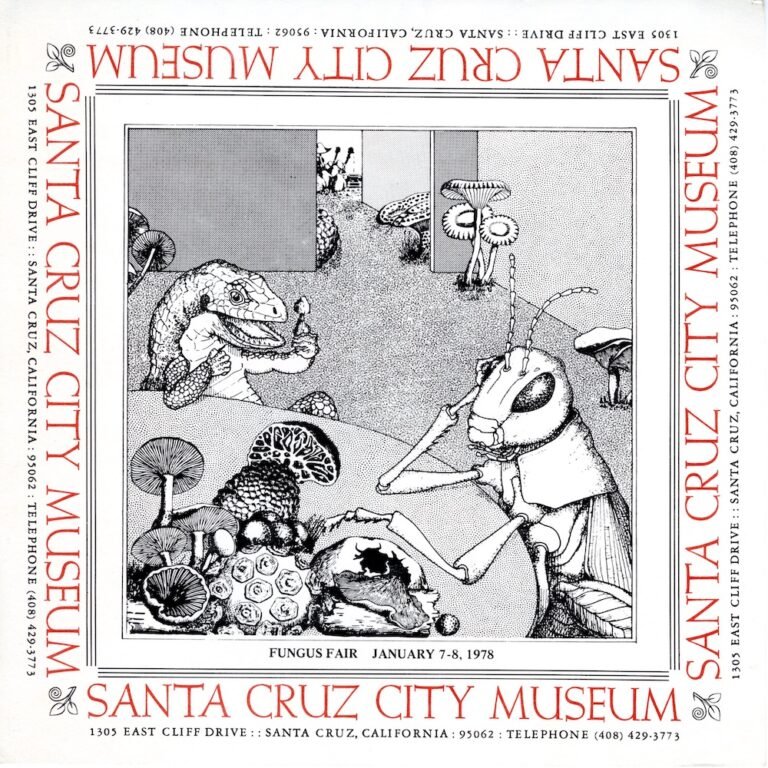
Against this backdrop, the Santa Cruz Fungi Fair (1974) and the Aspen Mushroom Festival (1974, later becoming the world-renowned Telluride Mushroom Festival) emerged as two of the earliest recorded modern fungi festivals. Both started as community-driven events to celebrate and spark interest in fungi, with a particular early emphasis on identification, foraging, and the medicinal potential of certain species. These festivals reflected a broader desire to find meaning, wonder, and self-sufficiency in the natural world, as well as to destigmatize ‘mushrooms’ which had been misrepresented and associated with crime thanks to Nixon’s War on Drugs.
Telluride’s mushroom festival has grown significantly since its founding, evolving from a small community gathering into a major regional event that attracts thousands of international attendees annually. Its success has even inspired similar events across Coloradox, fostering a state-wide appreciation for fungi and their role in ecology, cuisine, culture, and policy. In 2023, the festival even expanded to include a dedicated mycology research symposium, furthering its impact on the local and global communities past the dates of the annual festival itself.
Festivals with a Mission: Education, Sustainability, and Community
Since the seventies, more festivals have been created around the world, each with diverse aims molded by the territory from which they grew.
The African Rising Mushroom Festival in Uganda was started in 2022 to teach attendees mycological skills such as mushroom cultivation, with the misson to ‘harness the power of mushrooms to address the urgent needs of the region.’ A facilitator noted: “What stood out to me most was the energy around mushroom cultivation, and the happiness it brought the local community to have international visitors & educators”.
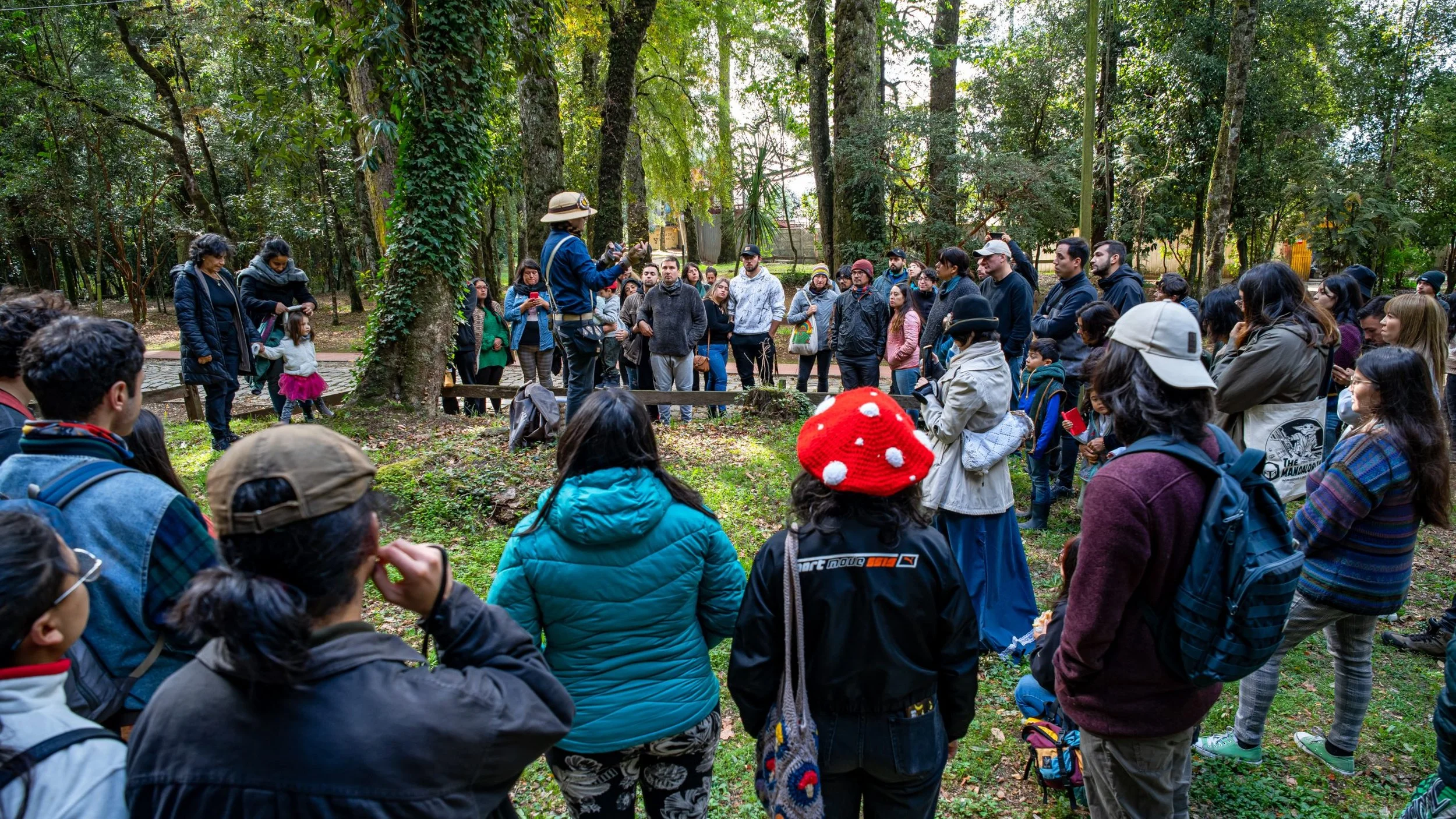
Chile – the hugely biodiverse South American country – hosted its first fungi festival in 2016 — Fungifest Valdivia — and by 2025, recorded more than twenty festivals nationwide. The festivals range from three-day gatherings of over 15,000 festivalgoers to intimate community events in municipal gymnasiums. The vision of Fungifest continues to be: “To democratize access to ancestral and scientific knowledge about mushrooms, facilitating instances of exchange and collaboration.”
There are also festivals that highlight a specific mushroom, usually for culinary reasons: for example, the masutake mushroom, highly prized mushroom in many Asian countries, is the star of a festival in Bhutan, where it is native (to the Ura valley). The famous truffle mushroom, which is usually associated with European countries such as France, Italy and Croatia, gained popularity in the United States throughout the 20th century – so much so that The Oregon Truffle Festival was created in 2006 to celebrate the 100 years of research the state has conducted on truffles, both native and European.
Fungi Festivals in the UK
Fungi festivals have been slow to catch on in the UK, but the tide is turning. The momentous global forces of the myco-movement — interlacing with the increasing local research, art, and tradition-sharing surrounding fungi — are slowly peeling back the stubborn vestiges of the country’s historic ‘mycophobia’ (fear of fungi).
This phenomenon has manifested first through the establishment of UK Fungus Day, initially implemented by the British Mycological Society – a UK charity founded in 1896 that promotes the study and understanding of fungi in all their forms. In 2023, All Things Fungi in West Sussex became the first dedicated mushroom festival in the British Isles, and has steadily grown to attract some of today’s most innovative global mycological thinkers and doers.
Further north, a few fungi festivals have popped up in rapid succession, building upon the aforementioned successes of the British ‘mycophilic’ (fungi-loving) community. The Edinburgh collective Mycobee Mushrooms host their annual foraging festival Forest to Fork which covers themes of medicinal mushrooms, fungus identification, and culinary applications. Northern Fungi Festival, after a successful first festival in Berwick-upon-Tweed in 2025, is relocating to Denholm in the Borders for its second installation.
The Edinburgh Fungi Festival emerges from the crescendo of the myco-movement at a unique point in time for both policy and culture. In 2024, UK and Chile co-launched aFungal Conservation Pledge at the 2024 UN biodiversity conference - the first time fungi entered international policy discussions at such a level. Within the UK, fungi are now being integrated into national biodiversity strategies, with calls to include them in protected species legislation and rewilding projects. This shift reflects a growing recognition of fungi as essential ecosystem engineers, deserving of the same conservation efforts as plants and animals. As EFF takes root in Edinburgh, it stands at the forefront of a mycological renaissance, where science, culture, and policy converge to redefine our relationship with the hidden networks that sustain life — just as its predecessors did. EFF isn’t just about mushrooms—it’s about reconnecting people with nature, sparking curiosity, and building community around one of Earth’s most vital (yet overlooked) king(queen)doms.
Further Reources